Hire Systems Engineers
Hire The Best Systems Engineers, Anywhere With Teamified
Find skilled professionals ready to drive results - hired a minimum of 50% faster.
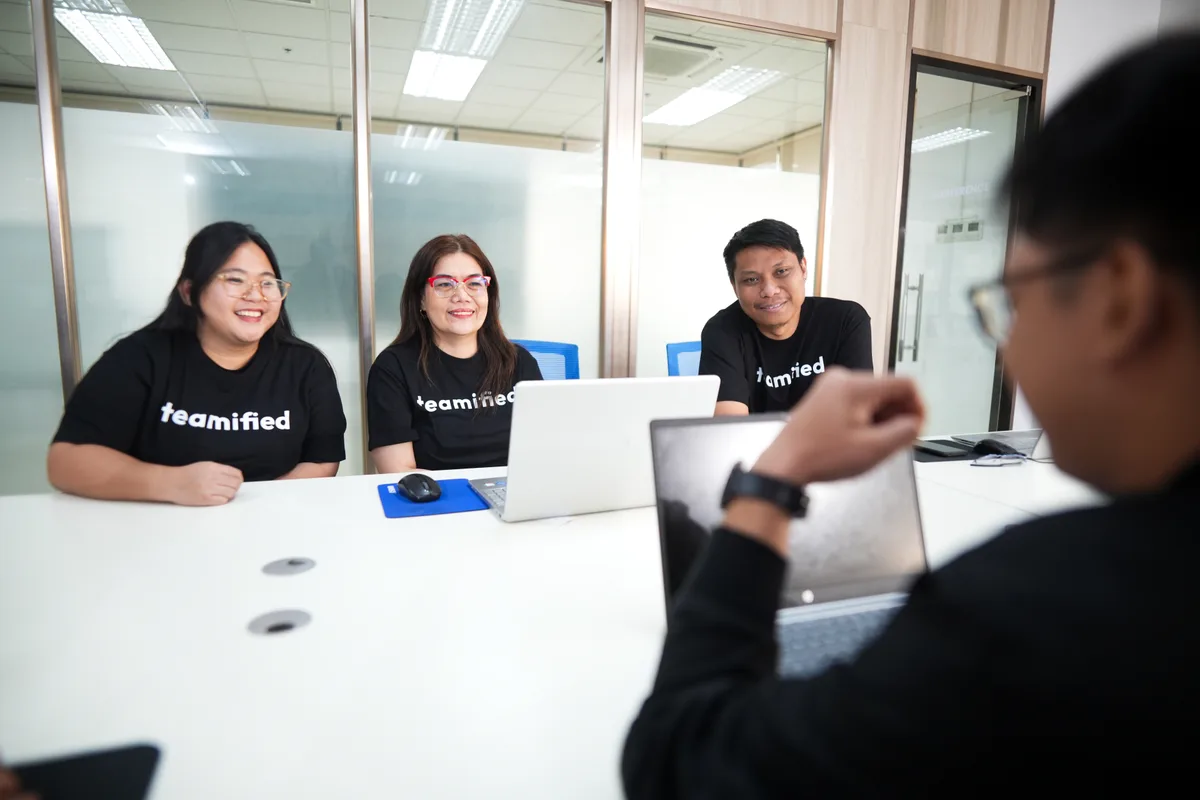
At Teamified, we connect you with world-class talent across a wide range of industries and business functions. Our streamlined process guarantees you get leading systems engineers - fast and hassle-free - so you can scale without the headaches.
The smarter way to build your systems engineering team.
Need to design and optimize complex IT infrastructure? Our systems engineers help you build scalable, reliable systems, implement automation, and ensure peak performance across your technology stack. Teamified talent, 100% dedicated to your business, driving innovation and delivering results.
Why choose us
Why choose Teamified
We make hiring systems engineers simple, fast, and reliable
Speed
Hire in days with our pre-vetted talent pool
Quality
Top 3% of systems engineers with proven track records
Compliance
All candidates verified for certifications and background
Cost-Efficiency
Save up to 70% compared to traditional hiring
Ongoing Support
Dedicated account manager and replacement guarantee
How it works
Our streamlined hiring process
From requisition to onboarding in 7 simple steps. AI agents run the busywork; a human always decides.
Submit Requirements
Post your hiring requisition in 2 minutes
AI-Powered Matching
Instantly matched with our thousand-talent pool
Review Profiles
Access comprehensive candidate data and portfolios
Watch AI Interviews
View pre-recorded AI interviews of matched talent
Recruiter Screening
Optional initial interview or schedule directly
Extend Offer
Make your offer with confidence
Onboarding & Support
We handle onboarding, management, and ongoing support
Submit Requirements
Post your hiring requisition in 2 minutes
AI-Powered Matching
Instantly matched with our thousand-talent pool
Review Profiles
Access comprehensive candidate data and portfolios
Watch AI Interviews
View pre-recorded AI interviews of matched talent
Recruiter Screening
Optional initial interview or schedule directly
Extend Offer
Make your offer with confidence
Onboarding & Support
We handle onboarding, management, and ongoing support
Experience levels
How experienced are our systems engineers?
From emerging talent to seasoned experts, we have the right fit for your needs.

1-3 years exp.
- Proficiency in Linux/Windows server administration
- Understanding of networking protocols and security basics
- Experience with virtualization technologies (VMware, Hyper-V)
- Familiarity with scripting languages (Bash, PowerShell)
- Basic knowledge of cloud platforms (AWS, Azure, GCP)
- Ability to troubleshoot system issues and provide technical support

3-5 years exp.
- Strong proficiency in system architecture design and implementation
- Experience with automation tools (Ansible, Puppet, Chef)
- Advanced knowledge of network configuration and security protocols
- Proficiency in monitoring and performance optimization
- Experience with disaster recovery and business continuity planning
- Understanding of DevOps practices and CI/CD pipelines
- Ability to manage complex infrastructure projects

5-7 years exp.
- Expert in designing enterprise-level system architectures
- Leadership in technical decision-making and strategic planning
- Strong experience with hybrid and multi-cloud environments
- Lead infrastructure modernization and digital transformation initiatives
- Proven track record in mentoring and building engineering teams
- Strategic thinking and alignment with business objectives
- Experience in capacity planning and scalability optimization
- Deep knowledge of security compliance and risk management
- Ability to drive organizational change and best practices
Hiring guide
What to check when hiring systems engineers
Systems engineers design, build, and operate complex technical infrastructure, spanning hardware, software, networking, and the integration layers that hold enterprise systems together. Offshore systems engineers contribute to design, documentation, integration work, and operational support, partnering with your local team on the architectural and engineering tasks that don't require physical presence.
Assess their ability to work across multiple technology domains
systems engineering requires breadth across compute, storage, network, and software integration.
Verify infrastructure as code experience (Terraform, Ansible, Puppet, or Chef)
manual configuration management is a liability at scale.
Confirm their documentation capability
systems engineering produces the architectural diagrams, runbooks, and operational documents the whole team relies on.
Test their failure mode thinking
systems engineers need to design for resilience, not just functionality.
Must-have skills
Red flags to watch for
Single-domain depth without systems-level thinking, a network engineer who can't discuss compute or a storage engineer who can't discuss networking isn't a systems engineer
No infrastructure as code experience, manual system builds that aren't reproducible are an operational liability
Poor documentation, systems engineering that produces no lasting documentation creates organisational knowledge debt
No resilience thinking, designs that work under normal conditions but haven't considered failure modes ship unreliable systems
No security architecture awareness, systems without designed-in security controls require expensive retrofitting
No cloud experience, pure on-premises systems engineers have significant gaps in the skills needed for modern hybrid environments
Breadth first, then depth
The best systems engineers have genuine breadth across infrastructure domains, enough to design integrated solutions, plus deep expertise in two or three areas. Hire for the breadth first (can they think across the full stack?) and the depth second (do they have the detailed skills you need right now?). A systems engineer with only one deep area of expertise will create dependency risk on everything outside their specialism.
Interview questions
"Walk me through how you'd design a highly available web application infrastructure on AWS."
Tests multi-AZ architecture, load balancing, auto-scaling, and database replication, fundamental cloud systems engineering patterns.
"How do you approach capacity planning for a system that's expected to grow 5x over the next 18 months?"
Forward-looking capacity modelling separates systems engineers from operators, the ability to plan for growth prevents crisis-driven scaling.
"Describe how you'd use Terraform to manage infrastructure across multiple environments (dev, staging, production)."
IaC workflow, modules, state management, environment separation, reveals infrastructure engineering maturity.
"A critical system is showing intermittent failures that are hard to reproduce. How do you approach the investigation?"
Intermittent failure diagnosis requires systematic observability, their approach to logging, tracing, and correlation reveals engineering depth.
Hiring models
Ways to hire a systems engineers
Every model has trade-offs. Here's how they compare so you can choose the right fit for your team.
General options
Local full-time
Hire directly in your city. Full cultural alignment and in-office presence, but the talent pool is limited and salaries are high.
Freelancer
Engage on a task or sprint basis. Fast to start, but loyalty is low and availability is never guaranteed long-term.
Dev agency
Hand off a scoped project to an agency. Good for defined deliverables, but you pay a premium and own very little of the relationship.
Via Teamified
Offshore staffing
Get a dedicated, full-time systems engineers: vetted, onboarded, and HR-managed by Teamified. Same output as a local hire, at a fraction of the cost.
On salary costs vs. hiring locally
- Hire in as little as 7 days
- Full-time, dedicated to your team
- We handle HR, payroll & compliance
- Replacement guaranteed
- No lock-in contract after minimum term
Executive search
We headhunt the talent that isn't actively looking. Deep network access, thorough vetting, and a curated shortlist, and you make the final call.
Industry average is 15%, so you keep the difference
- Access passive, hard-to-find talent
- Shortlist of pre-vetted candidates
- Confidential & discreet process
- Replacement guaranteed
- No lock-in contract
Managed recruitment
Hand us the brief and we run the whole process: sourcing, screening, interviews, and offer management. Your team stays focused on the business.
Up to 3 roles · 3-month minimum
- Job brief to offer a minimum of 50% faster
- Screened, interviewed & reference-checked
- We manage candidate communications
- Replacement guaranteed
- No lock-in contract
Client stories
What our clients say
Trusted by companies worldwide.
The flexibility and cultural fit made a huge difference. It wasn't just about filling seats - it was about finding the right people.

Nick Maait
Head of Engineering, Butn
Have a chat with Teamified. You will get a sense that it's much more of a relationship situation where they're really wanting to understand your business, as opposed to a more transactional experience, which is what we found talking with some other providers. The good thing is, there's a team behind you if you pick the right partner to help.

Ryan Ebert
Founder and CEO, Innings
Using Teamified is so much easier. One fee, then they handle all the HR stuff, so you have one less headache as you grow your business. All you want to do is minimise your headaches, and that's what Teamified does.

Ash Brown
Founder and CEO, Empiraa
I encourage all founders to treat this no different than hiring a local resource. The best thing about Teamified? They find great talent, vet them, and give you the flexibility to be as involved as you want in the hiring process.

Michael Nuciforo
Co-Founder and CEO, Thriday
Life at Teamified
Why our employees love working with Teamified
Keen to know more about our culture?
My favourite part would be the opportunity for growth. I've seen it in the short time that I've been here, and I'm looking forward to more.
JC,
Account Manager
Culture
We build culture like we build teams, intentionally
We're proud to have a 4.4 Glassdoor rating that backs that up. Because when people love showing up, great things happen.
Questions, answered
Hiring systems engineers, answered
Keep exploring
Explore related roles
Find the perfect fit for your team.
Systems Administrators
Manage and maintain IT infrastructure and server systems
ExploreDevOps Engineers
Streamline deployment and infrastructure automation
ExploreDatabase Administrators
Optimize and maintain database systems for peak performance
ExploreIT Support Specialists
Provide technical support and resolve IT issues
ExploreInfrastructure Engineers
Build and maintain IT infrastructure
ExploreNetwork Operations Centre Technicians
Monitor and maintain network operations
Explore