Iris · The interview agent
AI & human interviews. One rubric.
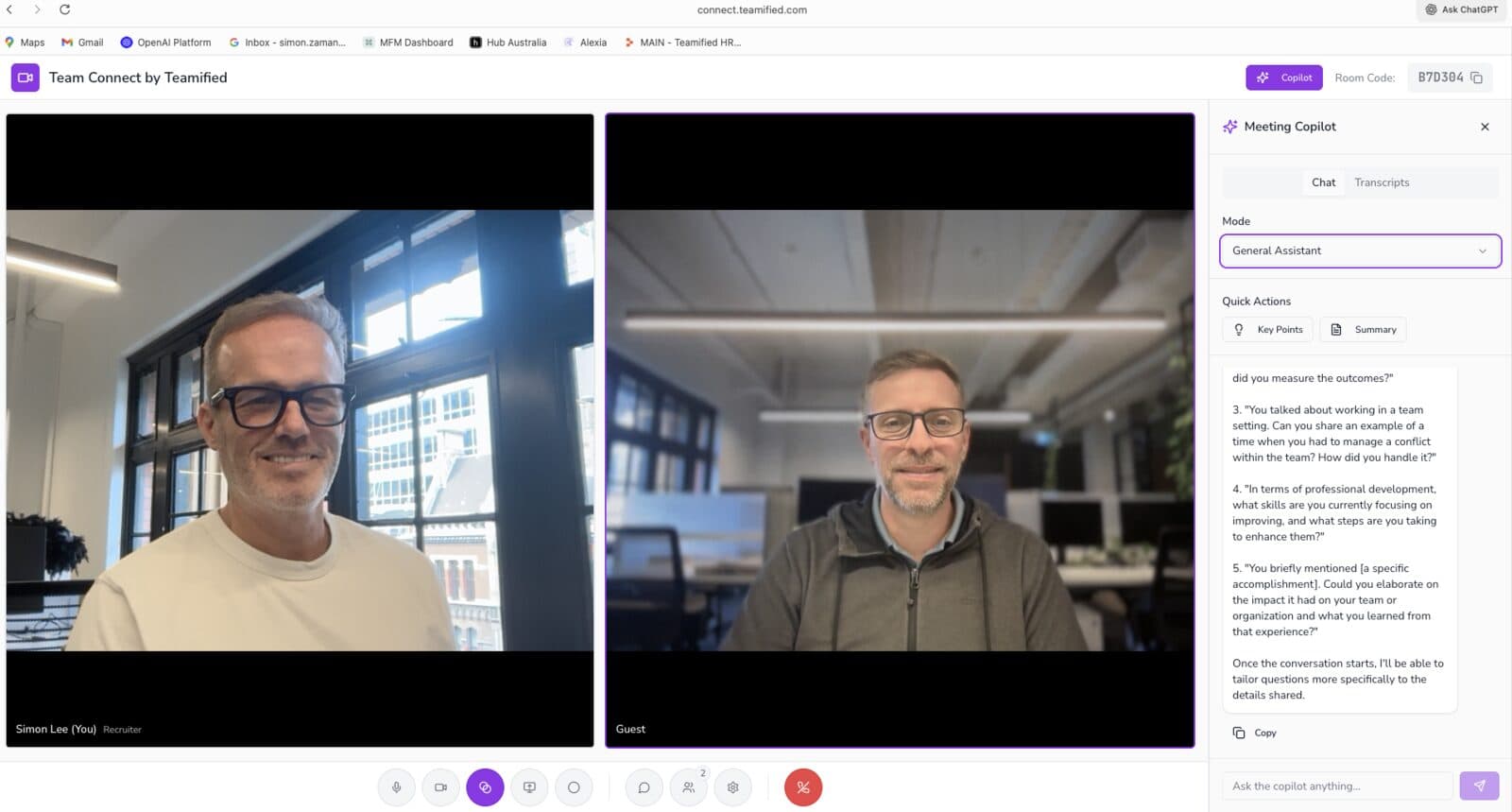
Iris runs the interview, or a person does, on Team Connect, our own AI-native video platform. Either way the candidate lands the same: recorded, chaptered and scored on one rubric, with the full read back within minutes of the call ending.
- AI-led by Iris, human-led by your team or ours, or both on the same role
- Every interview runs on Team Connect and lands scored on the same rubric
- Visual, communication and skill signals recorded through the whole session
- The full read back lands within minutes of the call ending
See it run
One interview, end to end
From the question set to the scored dossier: watch how an interview runs on Teamified, and what lands in front of the hiring manager when it ends.
What are Teamified AI & human interviews?
Interviews on Teamified run on Team Connect, our AI-native video platform, whether Iris the interview agent runs the round or a person does. Iris asks job-specific questions autonomously or joins your human-led round, recording visual, communication and skill signals through the whole session. Every candidate is scored on one rubric, with the full read back within minutes of the call ending, and a human always decides.
Your process, your dial
Can AI run the interview, or do I run it? Both, and the evidence looks the same either way.
Some teams want the whole round to run itself. Some want a person in every room. Most want both, depending on the role. So choose, per role, per round, or mid-hire.
Autonomous
Iris asks the questions, follows up on the answers and runs the whole interview. Zero human touch until the shortlist.
Candidates interview any hour, no scheduling. Your team wakes up to scored dossiers, not a queue of calls to book.
Human-led
You or our recruiters run the room. Iris joins the call, prompts the next question and records every signal.
The rooms that matter stay yours. Iris preps resume-specific questions and takes the notes, so every screen stays senior-quality.
Both
Autonomous for volume rounds, human-led for the roles that need a person. Switch per role, per round, or mid-hire.
Either way, every candidate lands the same: a recorded, scored dossier on the same rubric. The mode changes. The evidence does not.
One rubric, whoever runs the room
AI-led or human-led, every interview lands scored the same way.
The choice between an AI interviewer and a human one should be about the role and the round, not about which produces better evidence. So it never is. Iris-led rounds, human-led rounds and joint rounds all land in the same pipeline, scored on the same rubric, with the same dossier at the end.
That means results stay comparable across the whole pool: a candidate who interviewed with a person sits next to one who interviewed with Iris, on the same scale, with the same evidence attached. Choosing the human path never costs you signal.
Meet the humans who run the roomWhat stays identical, whoever asks the questions
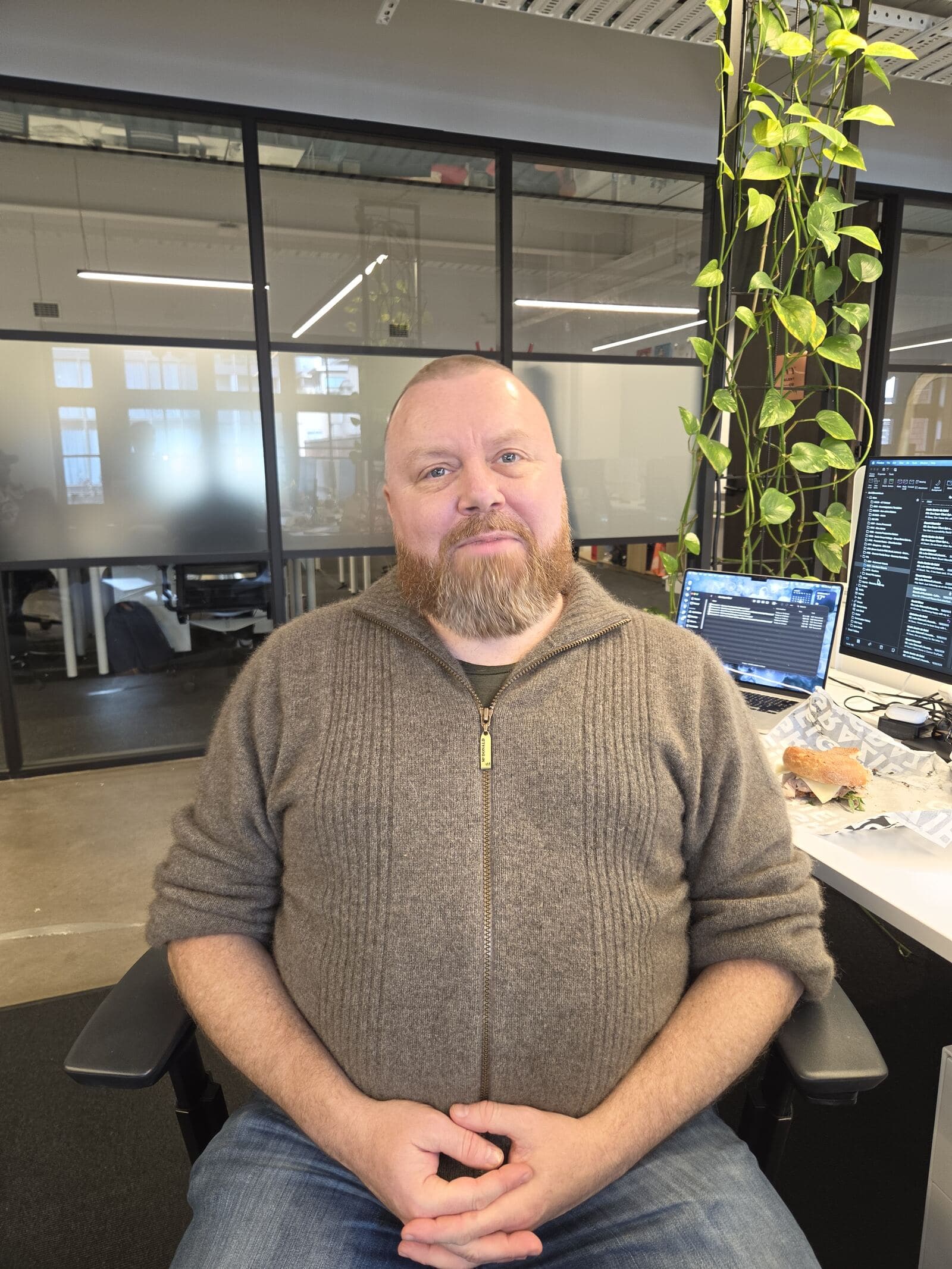 Live read
The rubric
Competency, communication and integrity scored on the same scale, AI-led or human-led.
The dossier
Chaptered replay, timestamped transcript, written strengths and gaps. Same format, every time.
The pipeline
Recordings, scores and transcripts land in the same place, feeding the same shortlist.
The decision
A person weighs the evidence and makes the call. Nothing is rejected by a machine.
The platform underneath
Every interview runs on Team Connect, our own AI-native video platform.
The agent is native to it: Iris opens the room, joins the call and runs the interview inside the software itself. Because the platform is ours, the recording, chapters, transcript and scores land straight in the hiring pipeline the moment the call ends.
Native, not bolted on
Iris runs calls in the software itself; human interviewers use the same rooms.
One pipeline, no exports
Recordings, transcripts and scores flow straight into the candidate's dossier.
Browser-based for candidates
Click a link and join. No downloads, no accounts, any hour that suits.
The scoring breakdown
What lands in the dossier after the call?
Every interview, AI-run or human-run, produces the same six dimensions within minutes of the call ending. Pick one to see it.
Skills and competency scoring
Every competency scored from the interview evidence
Each answer is assessed against the competencies defined for the role, not the resume's keywords. Iris produces individual subject scores for the skills the job actually needs, plus a skills-gap read: where the candidate is strong, and where the evidence ran thin. One rubric, every candidate, so scores compare across the whole pool.
- Individual score per competency, with the reasoning attached
- Skills-gap analysis against the role's requirements
- Overall interview score combining every dimension
- Comparable across every candidate in the role
Every dimension is a signal for a person to weigh. Nothing here rejects a candidate on its own.
Interview summary · subject scores
Nikita S. · Back End Developer
Solid grasp of backend development concepts in .NET Core, Azure and databases. Communication pace could improve; presented professionally with specific examples.
Subject scores
Overall 7.0 / 10
Communication
6/10Technical knowledge (.NET Core)
7/10Technical knowledge (Azure)
7/10Database knowledge
7/10Professionalism
8/10Where the time comes back
Stop watching interviews. Start checking moments.
The old way of reviewing a round is sitting through it again: an hour of video per candidate, or a first-round call you run yourself. Here, the score does the sitting through. You trust the number because every one links to the moment that produced it, and when something needs your eyes, the chapters take you straight there.
Confidence in the score
One rubric across every candidate, every score linked to its evidence, every analysis bias-checked by FairLens. You do not need to re-run the round to believe the result.
Chapters to the concern
The dossier points at the weak spots; the chapters jump you to them. Watch the system design answer and the hesitation, not the pleasantries.
Minutes, not hours
A hiring manager can know where a candidate stands in about five minutes: read the dossier, check the flagged moments, decide. Part of why the whole process runs a minimum of 50% faster.
Trust the candidate again
Can AI detect scripted or AI-assisted answers? Ours flags what does not add up.
Candidates now generate answers live with AI, read scripted responses through earpieces, or rehearse coached segments word for word. A note-taker summarising the interview you already sat through cannot catch it. Iris watches the whole recording, speech and video, and flags what does not add up.
What Iris flags, and what happens next
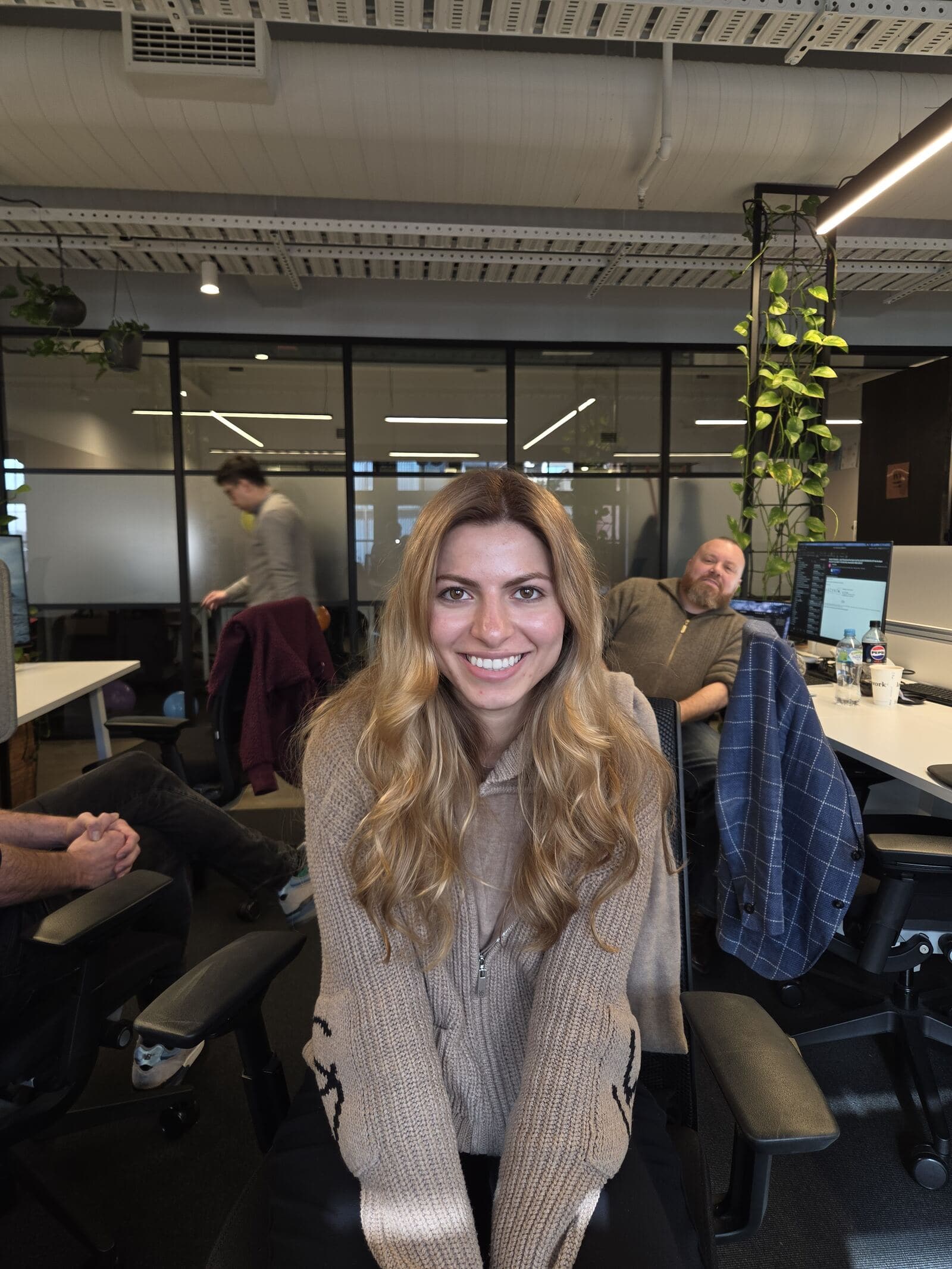 Live read
AI-assist signals
Per-response likelihood with a confidence read. Elevated scores are flagged, never actioned.
Speech pattern anomalies
Unnatural pacing, scripted cadence and memorised-sounding responses called out with timestamps.
Resume contradictions
Claims in the CV cross-checked against what the candidate actually said on camera.
A person makes the call
Every signal lands next to the replay for your hiring manager to judge. Iris never rejects anyone.
Iris FairLens
Every Iris analysis is checked by FairLens
A second agent screens every interview analysis for bias, and any hiring manager can re-run the same interview through a different model without leaving Teamified.
People decide
The evidence lands with a person, not a verdict
Minutes after the call ends, the recording, transcript and scored dossier are in front of a real reviewer on your team. The AI surfaces the signals. A human always decides.
- Every competency score linked to the moment it came from
- Chaptered replay and transcript ready when the call ends
- No candidate is rejected without a person saying so

Interview ended
Recording + transcript ready
Competency scores
6 dimensions scored
Each linked to its moment
A human always decides
The rest of the platform

 Job creationMason + Quill + Compass
 Job posting & sourcingPostman + Hunter
 Screening & verificationSift + VeraTrust, bias & fairnessFairLens
 Scheduling & candidate commsCal + EchoWhere the six weeks of a traditional hire goesThe storyFor job seekers: feedback on every interviewThe candidate sideYour process & pipelineYour rules
Questions, answered
AI & human interviews, answered.
Direct answers to the questions teams ask about AI and human video interviewing and scoring.
Alexia, the platform every agent runs on
Every agent you meet on this site runs on Alexia. Each one is configured with a primary model and a secondary failover, and each connects to 180+ software products. They range from agents built for a single task to agents that help run whole teams: gathering data, setting goals, creating tasks, and managing work and group chats.
Want to build your own agents? Log into Alexia and start today.
Build your own agents ATS
ATS Team Connect
 HRIS
HRIS Job Seeker