Key Takeaways
- The right ATS depends on hiring volume, workflow needs, team structure, integrations and budget.
- Compare core candidate tracking and collaboration before deciding whether AI or automation features are useful for your process.
- The systems listed here serve different needs. Verify current capabilities, plan limits, pricing and regional availability with each vendor.
- Consider how candidate records move into onboarding and employee management, and retain human oversight over hiring decisions.
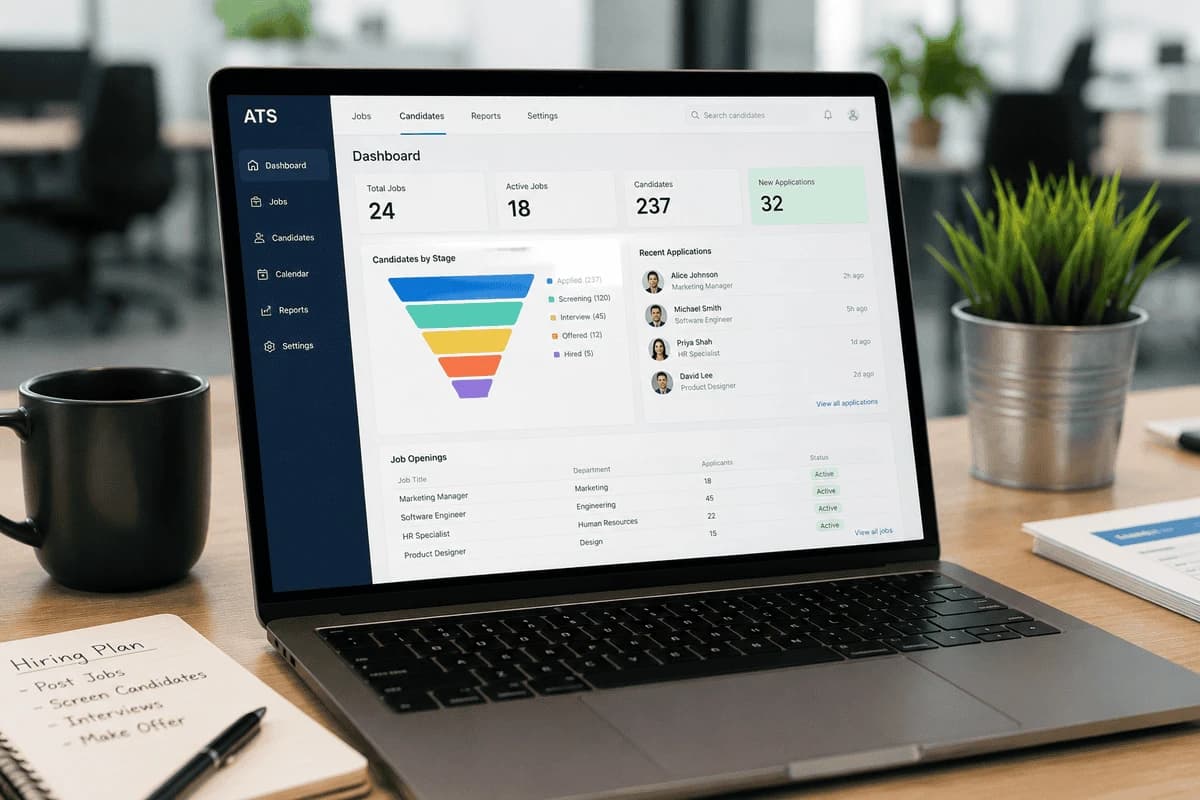
Hiring has become increasingly competitive, data-driven and reliant on technology. An applicant tracking system (ATS) is no longer just a place to store resumes; it can be a central hub for managing candidates, coordinating hiring teams, measuring recruitment performance and supporting the candidate experience.
AI is increasingly being used to support recruiting, including drafting job descriptions, screening resumes, searching for candidates and communicating with applicants. The benefits vary by tool and process, so confirm claims about efficiency or time savings against your own experience rather than treating them as guaranteed outcomes.
Choosing the best applicant tracking system in 2026 means looking beyond resume management. The platform should support your entire recruitment process while fitting naturally into the rest of your technology stack.
What to look for in an applicant tracking system
The best ATS software should simplify hiring rather than add another layer of administration. Core capabilities include candidate sourcing, resume parsing, interview scheduling, workflow automation, collaboration tools and reporting dashboards. Some products also offer AI-supported features to help recruiters prioritize candidates, summarize applications or generate interview questions. Availability and usefulness vary, so check the actual features in the plan you are evaluating.
Integration should also be part of the evaluation process. Many organizations use separate platforms for HR, payroll, communication, onboarding and reporting. An ATS that connects with these systems can reduce duplicate data entry, but confirm the specific connection and what information it exchanges.
Finally, consider how well the platform will support your business as hiring volumes increase. Migrating to a new ATS can be expensive and disruptive, so review implementation, export and growth requirements before selecting a system.
Applicant tracking systems to evaluate
These platforms have different product scopes and customer profiles. The descriptions below are orientation, not a ranking. Review the linked vendor materials and request a demonstration using your own hiring workflow.
Greenhouse
Greenhouse is known for structured hiring tools, including interview scorecards and a broad integration ecosystem. It may suit larger organizations with established recruitment processes. Confirm the current features, integrations and governance controls available in the package offered to your team.
Lever
Lever combines applicant tracking with candidate relationship management (CRM), making it relevant to companies that focus on talent pipelines and prospective candidates as well as active applicants. Check which sourcing, CRM and reporting features are included in the current proposal.
Workable
Workable offers an intuitive recruitment platform for job and candidate management, with product materials describing AI-supported recruiting features and job-board distribution. It may suit growing businesses without a dedicated recruitment operations team. Confirm availability, plan requirements and suitability for your process directly with Workable.
JazzHR
JazzHR focuses on hiring workflows for small and medium-sized businesses. Compare its current plans, interview scheduling, candidate tracking and hiring workflows against the needs of your team.
Breezy HR
Breezy HR provides collaborative hiring tools and visual recruitment pipelines. It may suit smaller teams looking for an accessible ATS. Check current plan details, candidate access, reporting and scheduling directly with Breezy HR.
Put these ideas to work
See how the workflows covered in this article run inside the Teamified platform.
Alexia
Alexia takes a broader approach than a standalone applicant tracking system. Alongside applicant tracking, its platform includes People Management, Team Connect, reporting, workflow tools and business applications. Recruiters can manage hiring while HR teams oversee employee information and managers collaborate on recruitment decisions. Review Alexia's product information and test the specific candidate, interview, offer and employee workflows that are available to your account. Do not assume all automation, reporting or integrations are enabled without configuration.
The growing shift towards unified hiring platforms
Recruitment does not operate in isolation. Hiring managers need visibility into team capacity, HR teams need employee records, finance teams track recruitment costs and leadership may want reporting across the employee lifecycle.
Managing separate ATS, HRIS, reporting, communication and collaboration platforms can create extra complexity. Some businesses therefore evaluate unified platforms that bring these functions into one environment and use automation to support repetitive administrative work. The value depends on whether the combined platform covers the workflows the organization actually needs.
Alexia: beyond a traditional ATS
Alexia takes a broader approach than a standalone applicant tracking system. Alongside applicant tracking, it combines People Management, workflow tools, reporting, collaboration and meeting features in one platform.
Recruiters can manage hiring while HR teams oversee employee information and managers collaborate on recruitment decisions. Before relying on cross-functional reporting or data handoffs, confirm which information is available to each role and what configuration is required. A shared platform may reduce the need to manage separate systems, but test the workflows and permissions before making that assumption.
Comparing Alexia with traditional ATS platforms
Use this high-level comparison to guide a product demonstration. Traditional ATS capabilities vary by product, plan and configuration; verify the current Alexia scope as well.
| Feature | Traditional ATS | Alexia |
|---|---|---|
| Applicant tracking | Core focus | Included in platform |
| AI candidate assistance | Varies by product | Review current feature availability |
| HRIS | Often a separate system | People Management available in platform |
| Team collaboration | May rely on separate tools | Team Connect available in platform |
| Business reporting | Often focused on hiring | Review cross-functional reporting features |
| Meeting notes and task management | May require other tools | Other Alexia tools may support these workflows |
| Workflow automation | Often centered on recruitment | Review current platform and configuration |
AI is changing recruitment software
AI has become one of the biggest differentiators among applicant tracking systems. Many products now offer resume screening, interview scheduling support and candidate recommendations. The next stage is connecting recruitment with the broader business.
Rather than analysing hiring data in isolation, some AI tools may help teams identify recruitment bottlenecks, summarize interviews, generate meeting notes, suggest follow-up tasks or report on hiring activity. The availability and accuracy of these capabilities vary by product and configuration. Ask for a demonstration using representative information, understand what data is processed, review options for human oversight and check privacy, security and retention terms.
AI should help recruiters spend more time engaging candidates and less time on repetitive administration, not replace consistent, job-related assessment by the hiring team.
Choosing the right applicant tracking system
Every organisation has different hiring requirements. A startup hiring a handful of employees each year has very different needs from a company recruiting across multiple departments every month.
Traditional ATS platforms remain excellent choices for businesses focused exclusively on recruitment. Organisations looking to simplify hiring while reducing software complexity may benefit from a broader platform that combines recruitment, HR, reporting and collaboration in one system. Alexia brings these capabilities together; review current AI and automation features and verify how they fit your process rather than assuming they will automate every hiring task.
Choose based on the workflows your team needs today and the systems you already use. Run a pilot with recruiters and hiring managers, check candidate experience, access controls, integrations and export options, and confirm that data can be moved if your needs change.

About the Author
Simon Lee
Co-Founder, Teamified
Simon Lee is the co-founder and CEO of Teamified, with deep expertise in cloud architecture, fintech, and SaaS platforms. He leads the vision behind Alexia.ai, designing AI-powered solutions that drive operational efficiency and business growth across global teams.
Connect on LinkedInExplore Alexia recruitment
Review how applicant tracking fits alongside People Management and Team Connect.