Candidate Matching · Teamified ATS
Fair, fast, defensible shortlisting, powered by AI.
Every candidate is scored across résumé analysis and interview performance, consistently, using the same criteria. No gut feel. No memory lapses. No bias toward whoever was reviewed first. Just ranked, evidence-backed results your team can act on with confidence.
- Combined résumé + interview score per candidate
- Candidates ranked by score, not by submission order
- Per-competency breakdown across all subject areas
- Every score backed by transcript, recording and analysis
- Your team makes the final hiring decision
What is AI candidate matching?
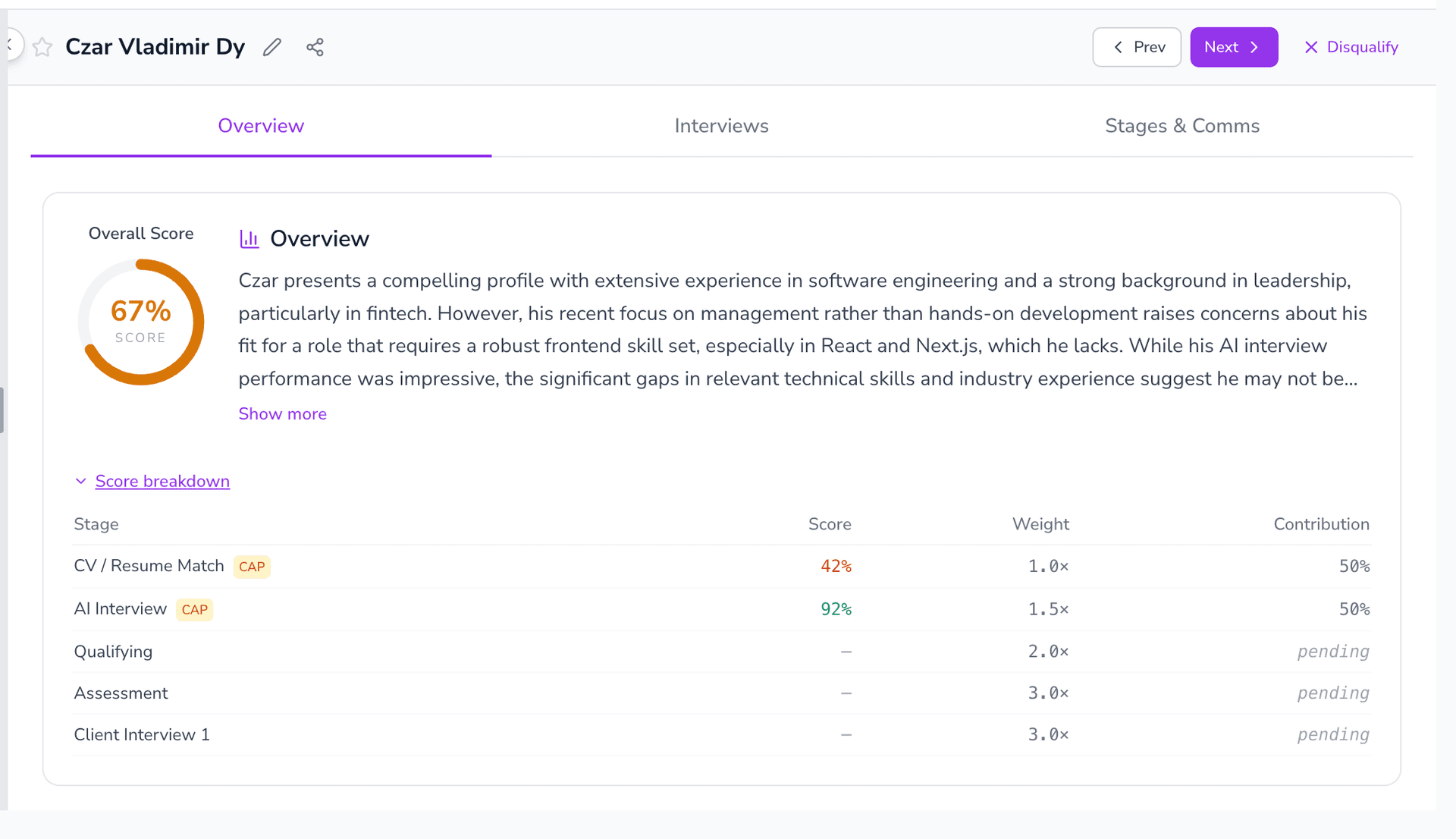
Candidate matching is how the Teamified ATS ranks applicants for a role. Sift and Iris produce a weighted combined score from each candidate's resume analysis and AI interview performance, applied consistently to every applicant and cross-checked across three AI models. Candidates are ranked by score, not submission order, and a human makes every hiring decision.


Problems we solve
What does human-only shortlisting really cost?
These aren't edge cases. They happen in almost every hiring process. AI-scored matching removes the conditions that cause them.
Recruiter memory fades
When there are 20+ shortlisted candidates, recruiters can't hold every detail in their head. A strong candidate seen on day one is half-forgotten by the time the hiring manager gets involved.
Every candidate's score, interview recording, transcript and analysis is stored and instantly accessible, no matter how long the process takes or how many candidates are in the pool.
Hiring managers stop at 3
Hiring managers often pick from the first few candidates they review, without seeing the rest of the list. Strong candidates deeper in the shortlist get overlooked simply because of their position.
AI-ranked results put the strongest candidates first, based on combined scores, not submission order. Every candidate is ranked before anyone reviews, so the best rise to the top regardless of when they applied.
Recruiter bias shapes shortlists
Human shortlisting is shaped by gut feel, pattern recognition and unconscious preference. Two recruiters reviewing the same pool will produce different shortlists, and neither can fully explain why.
Scoring is applied consistently across every candidate using the same résumé and interview analysis criteria. The rank is determined by data, not by who the recruiter happened to like.
No clear basis for comparison
When a hiring manager asks 'why this candidate over that one?', the honest answer is often 'they felt stronger in the call.' That's a hard position to defend, and a hard decision to make with confidence.
Every comparison is backed by scores, competency breakdowns, interview recordings and written analysis. Your team can justify every shortlisting decision with evidence, not instinct.
How scoring works
How is a candidate's combined score calculated?
Each candidate's combined score draws from two independent AI analyses, résumé and interview, and is cross-checked across three frontier models to reduce individual model bias.
Résumé analysis
- CV score against your role criteria
- Skills matched and skills gap
- Experience progression and seniority
- Role fit and industry alignment
Interview analysis
- Per-competency subject scores
- Sentiment arc and body language
- Integrity and authenticity score
- Behaviour and response quality
Combined score
- Weighted combined overall score
- Cross-checked across 3 AI models
- Ranked across every candidate in the role
- Explained in plain language per candidate
Scored across three frontier models: OpenAI, Anthropic and Google
Results are cross-checked across models to surface consistent signals and reduce the risk of any single model's bias influencing the outcome. The AI surfaces the evidence. Your team makes the call.
People decide
The evidence lands with a person, not a queue
Everything the agents produce, the ranked shortlist, the scoring breakdowns, the interview evidence, arrives in front of your hiring manager in one view. The AI surfaces the signals. A human always decides.
- Ranked shortlist with the reasoning behind every position
- Every score traceable back to résumé and interview evidence
- Nothing moves to offer without a person saying so

Shortlist ready
6 candidates, ranked
Top match
Combined score 87
Skills matched 9 of 11
You make the final call
How it works
How do you go from application to ranked shortlist?
01
AI scores every candidate
Every candidate who completes résumé analysis and AI interview receives a combined score, calculated using the same criteria across every applicant, regardless of when they applied.
02
Candidates ranked by score
The platform ranks every candidate by their combined score before your team sees the list. The strongest candidates are at the top, not the ones who applied first or happened to be reviewed first.
03
Your team reviews with full context
Your team sees ranked candidates with scores, per-competency breakdowns, interview recordings and transcripts. Every decision is backed by evidence that can be reviewed, questioned and defended.


Questions, answered
Candidate matching, answered.
Direct answers to the questions teams ask about AI candidate ranking and shortlisting.